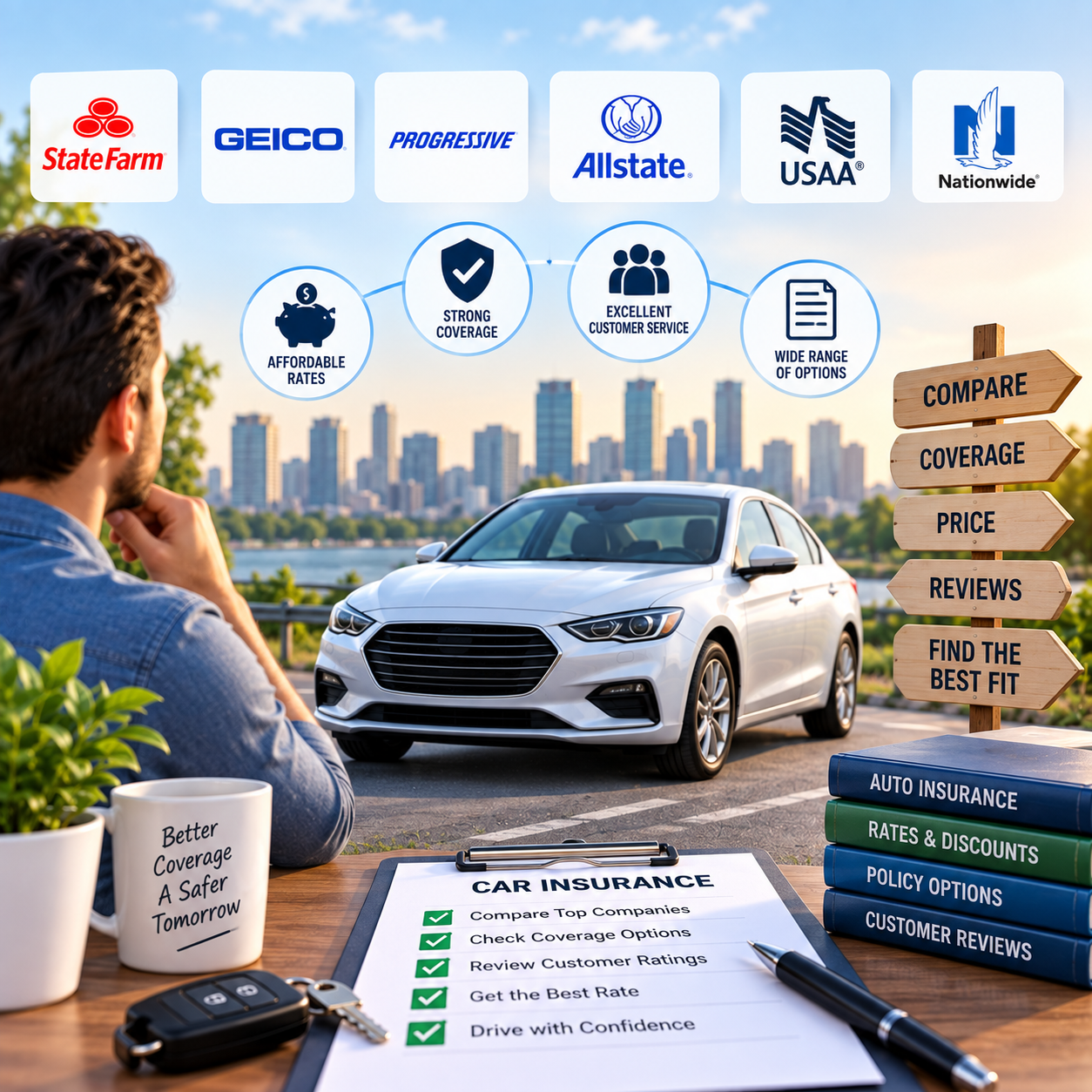
Choosing the right Car Insurance company is just as important as choosing the right coverage. While many insurers offer similar types of protection, they can differ significantly in pricing, customer service, claims handling, available discounts, and digital tools. A company that offers the lowest premium for one driver may not be the best choice for another. Your age, driving history, location, vehicle, and coverage needs all influence which insurer provides the best overall value. In this guide, we’ll compare some of the top car insurance companies in the United States for 2026. You’ll learn each company’s strengths, potential drawbacks, available coverage options, and the types of drivers they may be best suited for.
How We Evaluated the Best Car Insurance Companies
There is no single insurance company that’s perfect for every driver. Instead of ranking companies based only on price, we evaluated insurers using several important factors that affect the overall customer experience.
Our comparison considers:
- Financial Strength: The insurer’s ability to pay claims and remain financially stable.
- Customer Satisfaction: Overall customer experience with policy management and support.
- Claims Experience: How efficiently claims are handled and resolved.
- Coverage Options: Availability of standard and optional coverages.
- Discount Opportunities: Savings programs for eligible drivers.
- Digital Experience: Mobile apps, online account management, and quote tools.
- Availability: States where coverage is offered.
- Overall Value: The balance between price, coverage, and service.
Remember that the best insurer for you depends on your individual circumstances. Comparing quotes from multiple companies is still one of the most effective ways to find the right policy.
Quick Comparison of the Top Car Insurance Companies
| Insurance Company | Best For | Key Strength | Mobile App |
|---|---|---|---|
| State Farm | Overall value | Large agent network | Yes |
| GEICO | Budget-conscious drivers | Competitive pricing | Yes |
| Progressive | High-risk drivers | Flexible coverage options | Yes |
| Allstate | Drivers seeking optional features | Broad coverage choices | Yes |
| USAA* | Military families | Excellent customer satisfaction | Yes |
| Travelers | Customizable policies | Wide range of discounts | Yes |
*USAA membership is available only to eligible military members, veterans, and certain family members.
1. State Farm
Best For: Drivers looking for dependable service, local agents, and a strong overall balance of price and coverage.
State Farm is one of the largest auto insurers in the United States and has built a reputation for reliable customer service and a nationwide network of local agents. Its combination of financial strength, broad availability, and personalized support makes it a popular choice for many households.
Pros
- Large network of local agents.
- Strong financial stability.
- Good customer satisfaction.
- User-friendly mobile app.
- Multiple discount opportunities.
Potential Drawbacks
- Premiums may not be the lowest for every driver.
- Some optional coverages vary by state.
Coverage Options
- Liability coverage
- Collision coverage
- Comprehensive coverage
- Uninsured and underinsured motorist coverage
- Medical payments or PIP (where available)
- Rental reimbursement
- Roadside assistance
State Farm is often a good fit for drivers who value personalized service and want access to a local insurance agent when they have questions or need assistance.
2. GEICO
Best For: Drivers looking for competitive pricing and a convenient online experience.
GEICO has become well known for offering competitive rates, a streamlined quote process, and strong digital tools. Many drivers appreciate being able to manage their policies almost entirely online through the company’s website and mobile app.
Pros
- Competitive premiums for many drivers.
- Easy online quote process.
- Strong mobile app and digital account management.
- Wide availability across the United States.
- Multiple discounts for eligible customers.
Potential Drawbacks
- Fewer local agents compared with some competitors.
- Premiums vary significantly depending on the driver’s profile.
Coverage Options
- Liability coverage
- Collision coverage
- Comprehensive coverage
- Emergency roadside service
- Rental reimbursement
- Mechanical breakdown insurance (where available)
GEICO is often a strong choice for drivers who are comfortable managing their policies online and are looking for competitive pricing.
3. Progressive
Best For: Drivers who want flexible policy options or have unique insurance needs.
Progressive is known for its wide range of coverage choices and comparison tools. The company offers features that can appeal to drivers with different budgets and driving histories, making it a popular option for shoppers who want flexibility.
Pros
- Wide variety of coverage options.
- Numerous discount opportunities.
- Helpful online comparison tools.
- Strong digital experience.
- Usage-based insurance programs for eligible drivers.
Potential Drawbacks
- Rates may be higher for some low-risk drivers.
- Customer experiences can vary by location.
Coverage Options
- Liability coverage
- Collision coverage
- Comprehensive coverage
- Gap insurance
- Roadside assistance
- Rental reimbursement
- Custom parts and equipment coverage (where available)
Progressive is worth considering if you want flexible coverage options and the ability to customize your policy based on your individual needs.
4. Allstate
Best For: Drivers looking for a wide range of optional coverages and personalized policy features.
Allstate is one of the most recognizable auto insurance companies in the United States. The company offers a broad selection of standard and optional coverages, making it a good choice for drivers who want to customize their policies.
Pros
- Wide variety of optional coverage choices.
- Large network of local agents.
- Well-developed mobile app and online account management.
- Multiple discount opportunities.
- Helpful educational resources for policyholders.
Potential Drawbacks
- Premiums may be higher than some competitors for certain drivers.
- Rates vary depending on location and driving history.
Coverage Options
- Liability coverage
- Collision coverage
- Comprehensive coverage
- Roadside assistance
- Rental reimbursement
- Accident forgiveness (where available)
- New car replacement coverage (where available)
Allstate can be a good fit for drivers who value flexibility and want access to a wide selection of optional policy features.
5. USAA
Best For: Eligible military members, veterans, and their families.
USAA consistently receives strong ratings for customer satisfaction and claims handling. However, eligibility is limited to active-duty military members, veterans, certain National Guard and Reserve members, and eligible family members.
Pros
- Excellent customer satisfaction.
- Strong claims experience.
- Competitive premiums for many eligible members.
- Highly rated mobile app.
- Wide range of financial services.
Potential Drawbacks
- Not available to the general public.
- Eligibility requirements limit who can purchase coverage.
Coverage Options
- Liability coverage
- Collision coverage
- Comprehensive coverage
- Roadside assistance
- Rental reimbursement
- Rideshare coverage (where available)
If you’re eligible for membership, USAA is often worth including in your comparison when shopping for auto insurance.
6. Travelers
Best For: Drivers looking for customizable policies and a variety of discount opportunities. T
ravelers has been providing insurance products for many years and offers flexible policy options designed to meet a wide range of customer needs.
Pros
- Numerous available discounts.
- Flexible policy customization.
- Strong financial stability.
- Broad selection of optional coverages.
Potential Drawbacks
- Premiums vary by state.
- Not every discount is available in all locations.
Coverage Options
- Liability coverage
- Collision coverage
- Comprehensive coverage
- Gap coverage
- Roadside assistance
- Rental reimbursement
Travelers is a strong option for drivers who appreciate having several ways to tailor their coverage.
7. Nationwide
Best For: Drivers seeking policy flexibility and optional usage-based insurance programs.
Nationwide offers a variety of auto insurance products along with programs that may reward safe driving habits. Depending on your situation, these programs could help reduce your premium over time.
Pros
- Good selection of optional coverages.
- Safe-driving incentive programs.
- Strong financial stability.
- Helpful online policy management tools.
Potential Drawbacks
- Availability varies by state.
- Premiums differ based on driver profile.
Coverage Options
- Liability coverage
- Collision coverage
- Comprehensive coverage
- Roadside assistance
- Rental reimbursement
- Gap coverage (where available)
Nationwide may be particularly appealing to drivers interested in programs that reward safe driving habits.
8. Farmers Insurance
Best For: Drivers who prefer working with local insurance agents and want customizable policies.
Farmers Insurance offers a wide range of insurance products and provides personalized service through its network of local agents.
Pros
- Strong local agent support.
- Wide range of optional coverages.
- Numerous available discounts.
- Simple online policy management.
Potential Drawbacks
- Rates may be higher than some competitors.
- Coverage options vary by state.
Coverage Options
- Liability coverage
- Collision coverage
- Comprehensive coverage
- Roadside assistance
- Rental reimbursement
- Customized equipment coverage (where available)
Drivers who value face-to-face service often appreciate Farmers’ extensive network of local agents.
9. American Family Insurance
Best For: Drivers living in states where the company operates who want personalized customer service.
American Family Insurance has built a reputation for strong customer relationships and offers a variety of coverage options designed for families and individual drivers.
Pros
- Personalized customer service.
- Competitive discounts for eligible drivers.
- Easy-to-use mobile app.
- Strong financial foundation.
Potential Drawbacks
- Not available nationwide.
- Coverage availability depends on your location.
Coverage Options
- Liability coverage
- Collision coverage
- Comprehensive coverage
- Emergency roadside assistance.
- Rental reimbursement.
American Family may be a good option if the company serves your state and you’re looking for personalized service.
10. Erie Insurance
Best For: Drivers in eligible states looking for dependable service and strong customer satisfaction.
Although Erie Insurance operates in fewer states than many national insurers, it is frequently recognized for its customer service and claims experience.
Pros
- Strong customer satisfaction.
- Reliable claims handling.
- Competitive pricing in many service areas.
- Local agent support.
Potential Drawbacks
- Available only in selected states.
- Online features may be more limited than some larger competitors.
Coverage Options
- Liability coverage
- Collision coverage
- Comprehensive coverage
- Roadside assistance.
- Rental reimbursement.
If Erie Insurance operates in your area, it’s worth requesting a quote as part of your comparison process.
Choosing the Right Insurance Company
While rankings and reviews can be helpful, the best insurance company for you depends on your individual needs. Rather than choosing a company based solely on advertising or price, consider the complete value each insurer offers.
When comparing companies, ask yourself:
- Does the company offer the coverage I need?
- Are the liability limits and optional coverages suitable for my situation?
- Does the insurer have a strong reputation for handling claims?
- Are there discounts that apply to me?
- Can I easily manage my policy online or through a mobile app?
- Would I prefer working with a local agent?
Comparing several insurers before purchasing a policy is one of the best ways to find coverage that fits both your needs and your budget.
Best Car Insurance Companies by Driver Type
There isn’t one insurance company that’s the best choice for every driver. Your age, driving history, vehicle, location, and personal preferences all influence which insurer may provide the best overall value. The table below highlights general recommendations based on common driver profiles. These are not guarantees, but they can help you decide which companies to include when comparing quotes.
| Driver Type | Companies to Consider | Why They May Be a Good Fit |
|---|---|---|
| First-Time Drivers | State Farm, GEICO | Competitive pricing, educational resources, and easy policy management. |
| Budget-Conscious Drivers | GEICO, Progressive | Often offer competitive rates and a variety of available discounts. |
| Families | State Farm, Allstate | Broad coverage options and opportunities to bundle multiple policies. |
| Military Members & Families | USAA | Highly rated customer service for eligible military members, veterans, and qualifying family members. |
| Drivers Wanting Local Agent Support | State Farm, Farmers, Erie Insurance | Strong local agent networks and personalized assistance. |
| Drivers Seeking Flexible Coverage | Progressive, Travelers | Wide range of optional coverages and policy customization. |
| Safe Drivers | Nationwide, GEICO, State Farm | Potential access to safe-driving programs and discounts. |
Remember that the “best” company is the one that offers the right balance of coverage, service, claims support, and price for your individual situation.
Tips for Comparing Car Insurance Companies
When shopping for auto insurance, avoid making your decision based only on the premium. A slightly higher premium may provide better customer service, stronger claims support, or additional coverage options that become valuable after an accident.
Here are a few practical tips before choosing an insurer:
- Compare quotes from at least three insurance companies.
- Review liability limits, deductibles, and optional coverages—not just the price.
- Check customer satisfaction and claims experience from independent sources.
- Ask about available discounts before purchasing a policy.
- Read the policy details carefully so you understand what’s covered and what isn’t.
- Review your insurance needs every year, especially after major life changes.
Taking a little extra time during the shopping process can help you avoid unexpected surprises later.
Final Verdict
Choosing the right car insurance company is about more than finding the lowest premium. A quality insurer should offer dependable claims handling, financial stability, helpful customer service, appropriate coverage options, and competitive pricing. The companies featured in this guide have earned strong reputations in different areas, but no single insurer is the perfect choice for every driver. Your ideal policy depends on your personal circumstances, vehicle, location, and coverage needs. Before purchasing a policy, request quotes from several insurers, review the coverage carefully, and consider the overall value not just the monthly premium.
Conclusion
Finding the best car insurance company takes a little research, but the effort can pay off through better coverage, improved customer service, and potential savings over time. As your needs change, continue reviewing your policy and comparing insurers to ensure you’re receiving the protection and value that best match your situation.
At PolicyHelpUSA, our goal is to help U.S. drivers make confident insurance decisions through clear, accurate, and unbiased educational content. Whether you’re comparing insurance companies, choosing coverage, or looking for ways to reduce your premium, we’re here to simplify the process.
Continue exploring our complete Auto Insurance Guide with these related articles:
- What Is Car Insurance? The Complete Beginner’s Guide
- Types of Car Insurance Coverage Explained
- Liability vs. Full Coverage Car Insurance: Which One Do You Need?
- Collision vs. Comprehensive Insurance: What’s the Difference?
- How Car Insurance Deductibles Work
- How Much Car Insurance Do I Need?
- How Much Does Car Insurance Cost in 2026?
- How to Save Money on Car Insurance in 2026
By understanding how insurers differ and comparing your options carefully, you’ll be in a much stronger position to choose a policy that protects both your vehicle and your financial future.
Frequently Asked Questions
Which car insurance company is the best overall?
There isn’t a single company that’s best for everyone. The right insurer depends on your driving history, location, vehicle, coverage needs, and budget. Comparing multiple quotes is the most effective way to find the best fit.
Which company usually has the cheapest car insurance?
Premiums vary widely from one driver to another. Companies such as GEICO, Progressive, and State Farm are often considered by shoppers seeking competitive pricing, but the lowest premium for you may come from a different insurer depending on your individual profile.
Is it worth switching insurance companies?
Yes, if another insurer offers similar or better coverage at a more competitive price. Before switching, compare coverage limits, deductibles, discounts, customer service, and claims support not just the premium.
How often should I compare car insurance companies?
It’s generally a good idea to compare quotes at least once a year or whenever your policy is due for renewal. You should also shop around after buying a new vehicle, moving, adding a driver, or experiencing another major life change.
Does the largest insurance company always offer the best value?
Not necessarily. Large insurers often have extensive resources and broad coverage options, but regional companies may provide excellent customer service and competitive pricing in the states where they operate. Comparing several companies is the best approach.